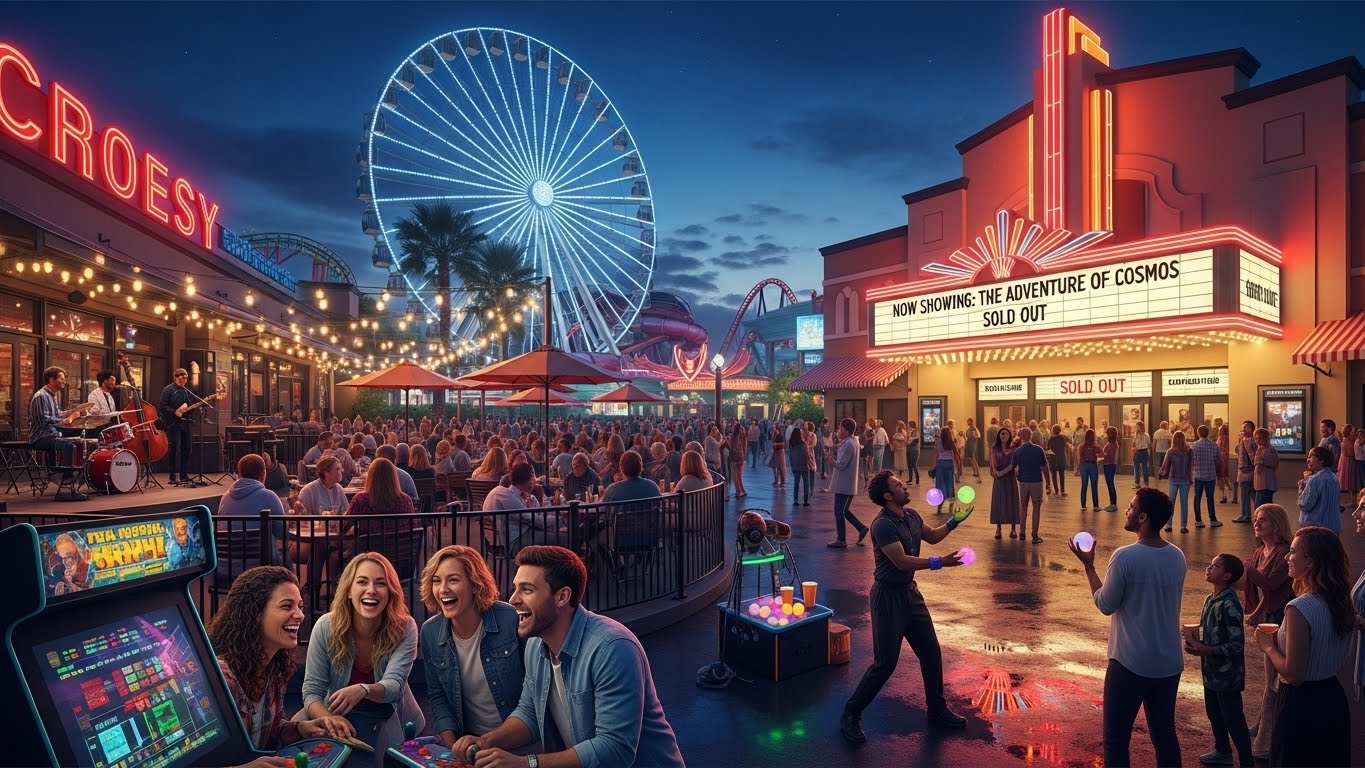

Entertainment has always been an intrinsic part of human culture, offering a means of relaxation, education, and connection. Over the centuries, the mediums through which we enjoy entertainment have undergone significant changes. From the grandeur of ancient theatre to the immersive worlds of video games and streaming platforms, entertainment has evolved in ways unimaginable just a few generations ago. In this blog post, we’ll dive deep into the progression of entertainment, highlighting its journey from traditional forms to modern digital spectacles.
The Beginnings of Entertainment: Ancient and Classical Arts
Entertainment has been a cornerstone of human civilization since the earliest records of history. In ancient times, entertainment took the form of stories, music, and theatrical performances, often tied to religious or cultural events. The Greeks and Romans are perhaps the most well-known civilizations to have formalized entertainment through public performances. They brought the world the concept of drama, with playwrights like Sophocles and Euripides penning timeless tragedies and comedies that are still revered today.
The Greeks also introduced the Olympic Games in 776 BCE, blending sport and entertainment in ways that have lasted to this day. In Rome, gladiatorial games, chariot races, and lavish feasts provided both entertainment and a means of political control. This era highlighted the power of performance and spectacle, with emperors using these events to solidify their rule and appease the masses.
The Birth of Theatre and Classical Music
As human civilization progressed, theatre and classical music flourished in Europe during the Renaissance and Baroque periods. The theatre became a significant cultural pillar in countries like England, Italy, and France. The Elizabethan era, in particular, saw the rise of William Shakespeare, whose plays remain cornerstones of Western literature. Theatres like London’s Globe Theatre became bustling hubs of artistic expression.
Meanwhile, classical music emerged as another form of refined entertainment, with composers like Johann Sebastian Bach, Ludwig van Beethoven, and Wolfgang Amadeus Mozart creating symphonies, operas, and chamber music that transcended national boundaries. Concert halls were built, and musicians became revered figures, drawing large crowds who sought to experience the transcendence of music in its purest form.
This period also gave rise to ballet, opera, and other forms of live performance that combined music, dance, and drama. The arts became more sophisticated, with larger audiences and greater expectations for innovation.
The Rise of Modern Entertainment: The Industrial Revolution
With the dawn of the Industrial Revolution in the 19th century, new forms of entertainment began to emerge. The invention of the printing press in the 15th century had already made literature more accessible, but by the 1800s, advancements in technology paved the way for mass entertainment. One of the most significant innovations was the introduction of photography in the 1830s, which would eventually lead to the creation of film.
In the late 19th century, motion pictures took shape. The first films were simple, short clips, often no longer than a few minutes. The Lumière Brothers, pioneers in early cinema, premiered their first film in 1895, marking the birth of cinema as we know it today. Over the next few decades, film evolved rapidly, with Hollywood becoming the global epicenter of cinema production.
Theaters, once venues for live performances, became home to these moving pictures, offering audiences a new form of entertainment — a way to experience stories through sight and sound. Silent films, followed by the introduction of “talkies” in the late 1920s, revolutionized the film industry and cemented cinema as a permanent part of global entertainment.
The Golden Age of Television
While film was flourishing, television became the new frontier for home entertainment in the mid-20th century. By the 1950s, television sets were becoming household staples, providing families with an alternative to radio and cinema. TV networks began to develop programming that catered to various tastes, from drama series and comedies to news broadcasts and variety shows.
The 1960s and 1970s saw television mature into a cultural force, with shows like I Love Lucy, The Twilight Zone, and The Ed Sullivan Show gaining massive popularity. TV became a social experience, bringing people together for shared viewing, particularly when major events such as the moon landing in 1969 or the Watergate scandal broke on the airwaves.
As the decades rolled on, television continued to grow in both sophistication and content diversity. The introduction of cable television in the 1980s gave rise to niche channels, and by the 1990s, satellite TV expanded entertainment options even further. Alongside the growth of cable came the advent of VHS and later DVDs, which allowed people to watch their favorite movies and TV shows at home on-demand.
The Digital Revolution: Enter the Internet and Streaming
The most significant shift in entertainment over the past two decades has come from the digital revolution. The internet, which began as a tool for communication and research, quickly became a platform for entertainment. Online video streaming, digital music, and social media have completely transformed how people consume content.
The early 2000s saw the rise of platforms like YouTube, which democratized video production and allowed anyone to share their creations with the world. What began as an amateur platform for home videos evolved into a multi-billion-dollar industry. YouTube stars became influencers, building massive followings and generating significant revenue through ads and sponsored content.
In the world of television and film, streaming services like Netflix, Hulu, and Amazon Prime Video began to reshape the way audiences consumed media. No longer confined to weekly schedules, viewers could now binge-watch entire seasons of their favorite shows at their own pace. Original content produced by these platforms, such as Stranger Things and The Crown, revolutionized the entertainment industry, giving rise to a new era of “on-demand” television.
With streaming came the decline of traditional cable TV, and the industry began to shift toward subscription-based models. The convenience of watching content on a variety of devices — from smartphones to smart TVs — made streaming the preferred way to access entertainment. The competition among streaming platforms also sparked a golden age of television, with an explosion of high-quality, diverse content that catered to a global audience.
Video Games: The Interactive Frontier of Entertainment
Alongside the rise of streaming, video games have become a major pillar of modern entertainment. From their humble beginnings in arcades to the sophisticated, immersive experiences available today, video games have undergone a remarkable evolution.
In the early days, video games were simple, pixelated experiences, often involving only basic mechanics like jumping or shooting. As technology advanced, so did the complexity of games. The 1990s saw the advent of 3D graphics, bringing iconic franchises like Super Mario 64 and The Legend of Zelda: Ocarina of Time into the gaming mainstream.
Today, video games are fully immersive experiences that blend storytelling, gameplay, and visual design. Games like The Witcher 3 and The Last of Us offer intricate narratives that rival those of films and TV shows, while franchises like Fortnite and Call of Duty have become social spaces where millions of players interact in real time.
The rise of eSports has also elevated gaming to a competitive sport, with tournaments offering multi-million-dollar prize pools and drawing audiences that rival those of traditional sports. Video games are no longer just a pastime — they are a global cultural phenomenon, shaping everything from music to fashion.
The Future of Entertainment: Virtual Reality and Beyond
Looking ahead, the future of entertainment seems boundless, thanks to innovations in virtual reality (VR) and augmented reality (AR). VR allows users to step into fully immersive, 3D worlds, providing a new layer of interactivity. While still in its infancy, VR has already made significant strides in gaming, with titles like Half-Life: Alyx demonstrating its potential for deep storytelling and engagement.
AR, on the other hand, is enhancing real-world experiences, such as in mobile games like Pokémon GO, where players interact with the environment through their smartphones. The integration of AR into entertainment could lead to fully interactive experiences that blend the digital and physical worlds.
Artificial intelligence (AI) is also poised to play a crucial role in the future of entertainment. AI-driven content creation tools are already beginning to produce music, movies, and video games, and in the future, AI may be able to generate personalized content tailored to individual tastes. Moreover, AI could transform how we engage with media, from creating interactive narratives to producing real-time virtual actors.
Conclusion: The Never-Ending Evolution of Entertainment
Entertainment, in its many forms, has always been a reflection of human creativity, technological advancement, and cultural shifts. From the ancient Greeks to the digital age, entertainment has evolved in tandem with societal changes, constantly adapting to new technologies and the changing needs of audiences.
As we move forward into an increasingly interconnected, technology-driven world, the possibilities for entertainment are endless. The fusion of digital experiences, interactivity, and AI will continue to push the boundaries of what we think is possible. One thing is certain: entertainment will remain a vital and ever-changing part of the human experience.